Estuary Lure Guide: Use the Right Fishing Lure
Choosing the Best Lure: Advice from a Guide!
Walk into any tackle store and you'll be confronted by walls of soft plastics, hardbodies and topwater lures in every conceivable shape, size and colour. It's enough to make even experienced anglers second-guess themselves.
The reality is far less complicated.
There isn't a single "best" estuary lure. In fact, most successful anglers tend to cycle through the same handful of proven lure styles, changing them only when the conditions demand it. The trick isn't owning more lures… it's understanding why you're tying one on in the first place.
Before opening the tackle tray, take a minute to read the water. How deep is it? Is it crystal clear or discoloured? What's the tide doing? More importantly, what are the fish likely feeding on? Answer those questions first and your lure choice usually becomes obvious.
Fish the Depth First
Depth is probably the most overlooked part of lure selection, yet it dictates almost everything else.
On shallow flats less than two metres deep, subtlety wins. Flathead bury themselves in the sand waiting for an easy meal, bream cruise the edges looking for prawns, and whiting hunt across the skinny water. This is where lightly weighted soft plastics, shallow-diving hardbodies and surface lures all come into their own. Long casts and quiet presentations are often more important than lure colour.
Move out into water between two and five metres and you've entered the estuary's all-round zone. Drop-offs, rock walls, bridge pylons and weed edges can all hold fish, sometimes several species in the same area. Soft plastics become the natural choice because they're so adaptable. Simply changing jighead weight lets you fish anywhere in the water column, while suspending hardbodies excel around structure where a long pause can make all the difference.
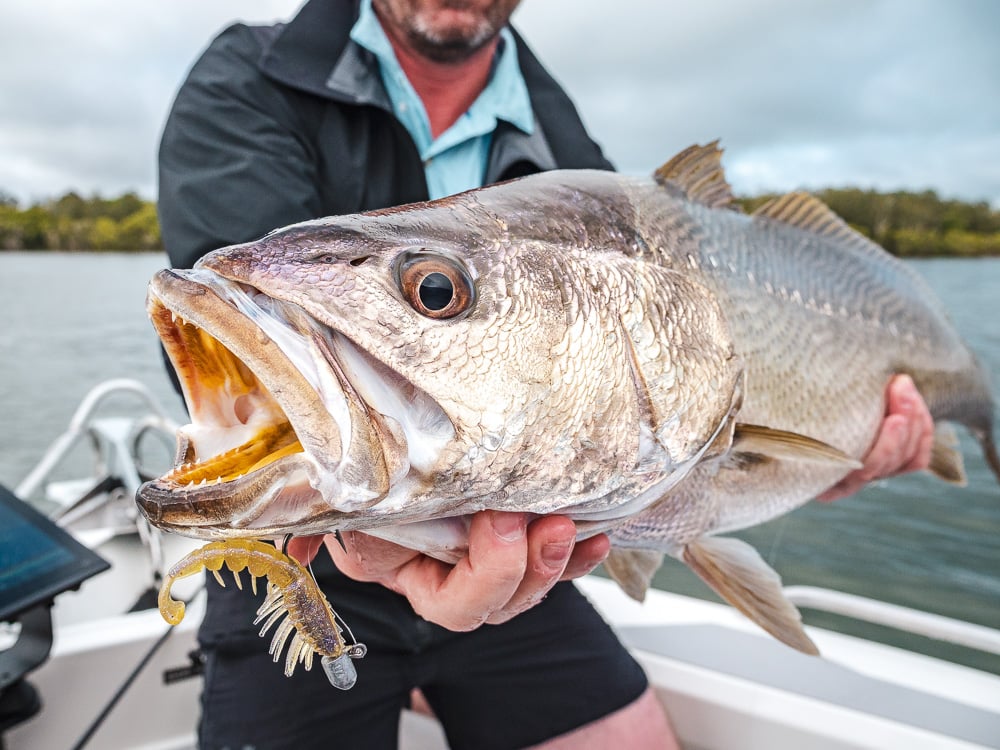
In water deeper than five metres, lure control becomes increasingly important. Mulloway, bigger flathead and quality bream often hold around bridge pylons, deep holes and channel edges where the current is stronger and the fish have more room to move. Heavier jigheads help keep plastics in contact with the bottom, deep-diving hardbodies cover water effectively when trolling, and soft vibes are excellent over relatively clean ground where they can be worked without constantly fouling.
Whatever depth you're fishing, the aim is always the same: keep the lure in the strike zone for as long as possible.
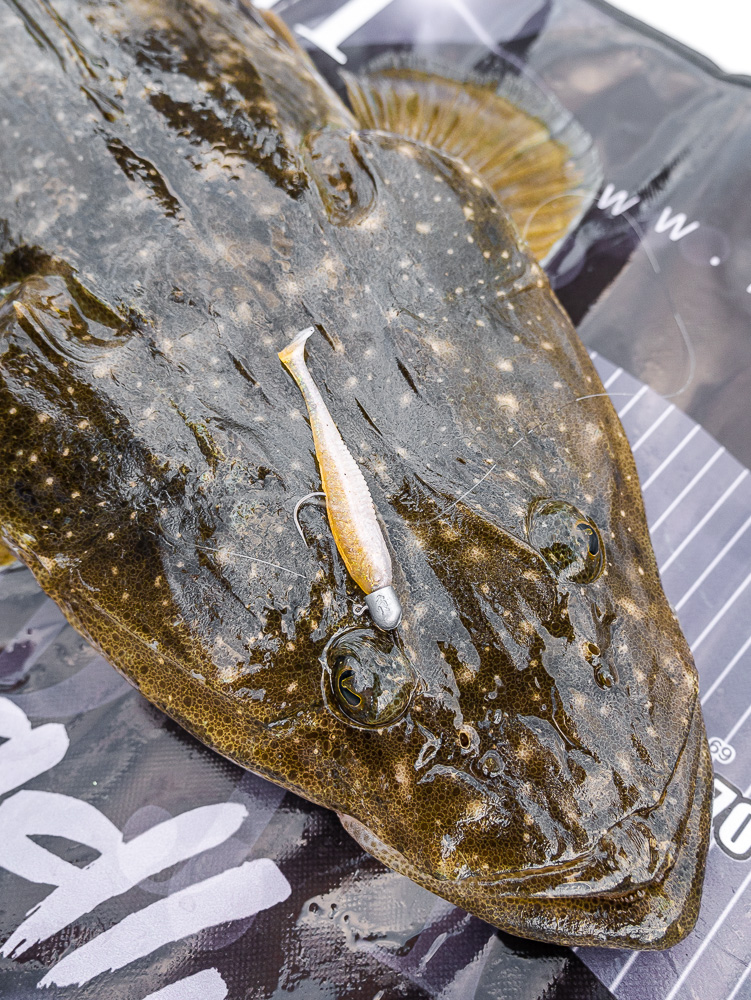
Above: Big fish will eat small lures!
Three Lure Styles Cover Almost Everything
There's no need to carry hundreds of different lures. Three broad categories will cover almost every estuary situation you're likely to encounter.
Soft Plastics
If one lure has revolutionised estuary fishing over the past couple of decades, it's the soft plastic.
They're adaptable, affordable and capable of catching just about every predatory species swimming in an estuary. By simply changing jighead weight, the same lure can be fished across ankle-deep sand flats or bounced through a ten-metre channel.
Profile is where soft plastics really shine. Slim baitfish patterns closely imitate whitebait, garfish and herring, making them ideal whenever predators are keyed in on small bait. Paddle tails produce more vibration and are a natural fit when mullet or larger baitfish are present, while curl-tail grubs continue working at the slowest retrieve speeds, making them deadly when fish are feeding on prawns or are simply less active.
The biggest mistake many anglers make is choosing a lure based on colour before considering size and profile. Fish generally recognise shape and movement long before they notice subtle differences in colour.
Hardbody Lures
Few lures can match a hardbody around structure.
Whether you're casting at oyster racks, bridge pylons, moored boats, fallen timber or rock walls, floating and suspending minnows allow you to place a lure exactly where fish are holding and keep it there.
It's often the pause that catches fish rather than the retrieve itself. A suspending lure hanging motionless beside a snag looks like an injured baitfish that's made a mistake—and predators rarely let those opportunities pass.
Shallow divers are excellent over sand flats and weed beds, while deeper models come into their own when trolling drop-offs and channel edges for larger flathead or mulloway.
Surface Lures
Nothing in estuary fishing quite compares to watching a fish explode on a surface lure.
While many anglers immediately think of whiting, surface fishing is just as effective for bream, tailor and even flathead under the right conditions.
The best sessions often happen when there's a little breeze on the water rather than glassed-out conditions. Wind breaks up the surface, gives fish confidence and helps disguise the lure. Add prawns skipping across the top or nervous baitfish spraying from predators and it's difficult to justify fishing anywhere but the surface.
Walk-the-dog stickbaits and small poppers cover most situations, with the key being to match your retrieve to the fish's mood. Sometimes they want plenty of noise and aggression; other times a slow, subtle glide is all that's needed.
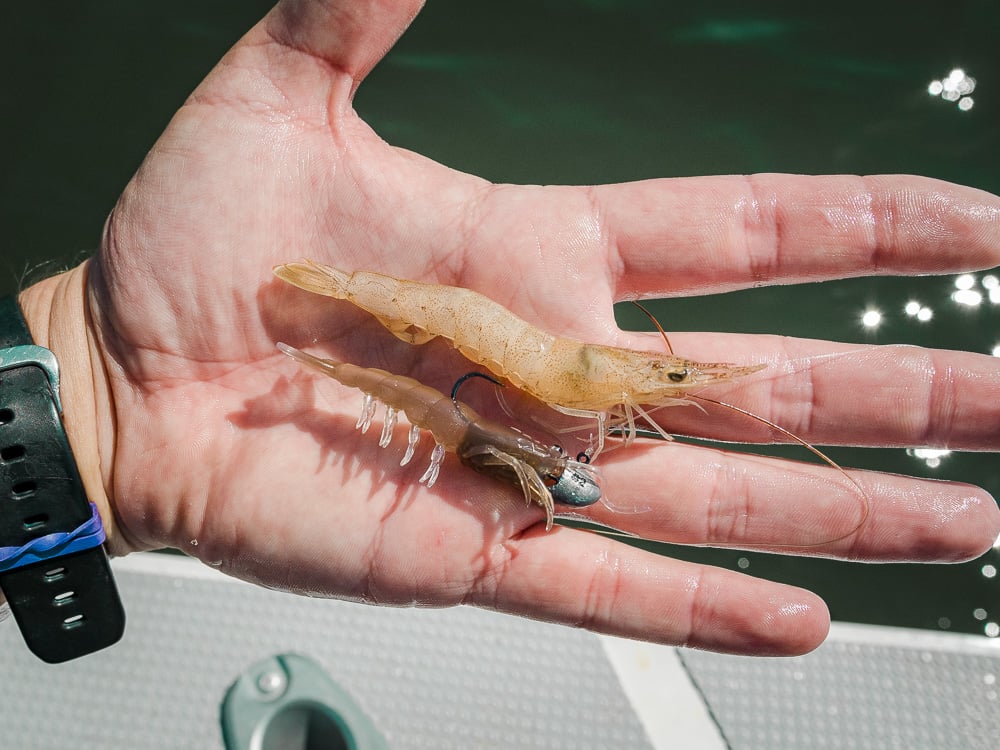
Above: The Pro Lure Clone Prawn matches the prey perfectly!
Match What They're Eating
The easiest way to simplify lure selection is to forget about brands and ask yourself one question:
What are the fish feeding on?
If schools of whitebait are flickering along the shoreline, choose a slim-profile lure. If prawns are popping from the shallows, a smaller grub or prawn-style plastic is often the better option. Around mullet schools, larger paddle tails and suspending minnows usually make far more sense.
Fish become conditioned to feeding on whatever food source is most abundant at the time. Matching that profile is usually far more important than chasing the latest lure release.
Action Before Colour
Anglers love talking about colours, but fish usually care far more about how a lure moves.
A paddle tail throws out vibration with every turn of the reel. A jerk shad darts unpredictably like a wounded baitfish. Curl tails keep working at almost any speed, while a suspending hardbody hangs motionless during the pause. Surface walkers glide and weave across the top, imitating a panicked baitfish trying to escape.
Each creates a different trigger, and choosing the right action often matters far more than choosing between two shades of green.
Colour Is the Finishing Touch
Colour certainly has its place, but it should be the last decision you make—not the first.
In clear water, natural baitfish colours such as Ghost, Ayu, Olive, Bloodworm and Motor Oil consistently produce because they blend naturally with the environment.
As the water carries more colour, adding contrast helps fish locate the lure. Green Pumpkin, brown tones and white are reliable all-round choices in lightly stained water.
When visibility really drops, don't be afraid to fish bold. Chartreuse, pink, black and white all create stronger silhouettes or greater contrast, making them easier for fish to detect.
Keep It Simple
The anglers who consistently catch fish aren't necessarily the ones with the fullest tackle boxes. More often, they're the ones who understand where fish are holding, what they're feeding on and how to put the right lure in front of them.
Choose your lure to suit the depth. Match its profile to the available prey. Let the action do the work. Then, and only then, worry about colour.
Get those fundamentals right and you'll quickly discover that successful lure fishing has far less to do with owning hundreds of lures than it does with fishing a handful of good ones well.